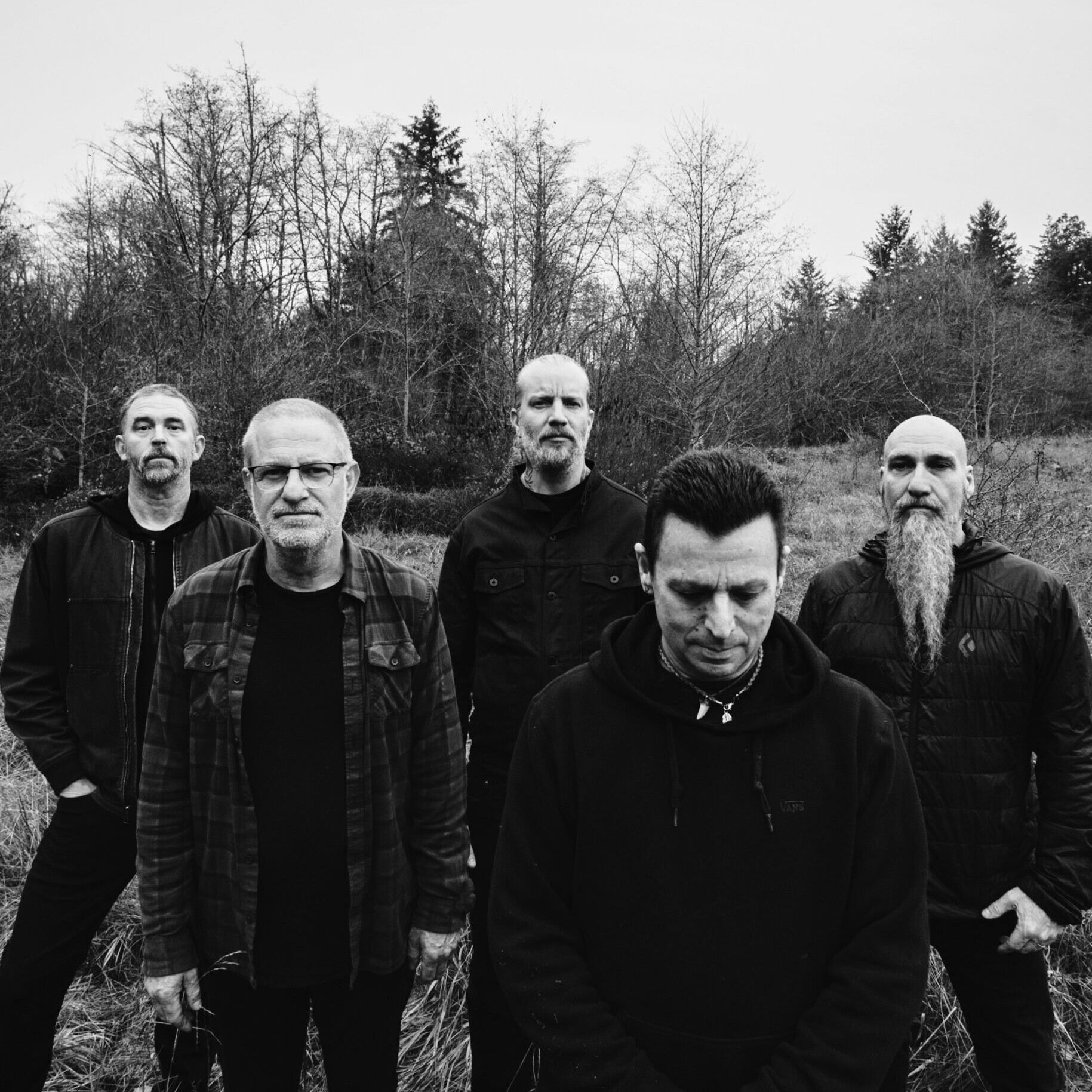
Some bands don’t just write songs, they carry histories. Ameretat emerged recently as a two-piece project by S and K, children of the Iranian diaspora with family on both sides of an autocratic divide, channelling their inherited memories into raging sounds. Drawing directly from the folk traditions of the Lor people of Western Iran while embracing both musical and literary influences from across the Iranian world, Ameretat fold ancient melody, drone, and poetry into the framework of crust and hardcore punk. The resulting creation feels both ritualistic and confrontational. This fusion represents an unbroken line between the old and the now, between cultural memory and present-day urgency, gaining even more current relevance with the news coming out of Iran right now.
Lyrically and thematically, Ameretat traverse war, power, love, despair, kindness, and shared humanity, weaving together Persian, Avestan, Lori, Kurdish, and English. Echoes of the Shahnameh, the Avesta, and the Sufi poetry of Omar Khayyam, Rumi, and Hafez surface not as references to be coldly decoded, but as emotional architecture, as something to be felt as much as understood. Despite the depth and historical weight of their work, Ameretat’s music hits with startling immediacy, folk-infused, crust-scarred hardcore that bypasses explanation and connects directly to the nervous system. Trust us: there will be a moshpit at this show.
For the first time since the band’s inception, Ameretat have been performing, and will appear at Roadburn, with a full live lineup, featuring artists of shared Middle Eastern heritage drawn from the punk and hardcore underground. As the band explained to us: “Ameretat is taking what started as a duo-project to a full live lineup, which we’re hoping will bring a lot more energy, as well as the folk influence we tried to capture on the record. We’re all really excited to play the festival alongside such amazing artists!” Existing at the intersection of East and West, tradition and resistance, Ameretat defy simplification at every turn, insisting instead on empathy, complexity, and the enduring power of collective humanity.
– José Carlos Santos